Demystifying Casino RTP Fluctuations: Hourly Shifts, Venue Quirks, and Machine Quirks That Shape Payouts
14 Apr 2026
Demystifying Casino RTP Fluctuations: Hourly Shifts, Venue Quirks, and Machine Quirks That Shape Payouts
Unpacking RTP: The Core Concept Behind Casino Payouts
Return to Player, or RTP, stands as the theoretical percentage of wagered money a casino game returns to players over millions of spins or plays, and while casinos program machines to hit these long-term averages—often between 85% and 98% depending on the game and jurisdiction—short-term results swing wildly because of built-in randomness from random number generators, or RNGs, which ensure every spin remains independent yet unpredictable. Experts who've analyzed decades of casino data point out that RTP doesn't guarantee wins on any single session, since variance, or volatility, dictates those hourly ups and downs, with high-volatility games delivering rare but massive payouts while low-volatility ones offer steadier, smaller returns. Data from regulatory reports reveals how this plays out in real venues, where observed RTPs fluctuate not just daily but hourly, shaped by player volume, machine settings, and even subtle venue policies.
What's interesting here involves the distinction between theoretical RTP—the number set by game developers—and actual RTP, which regulators track through audited play data; for instance, one study from gaming researchers found that while slots advertise 92-96% RTP, monthly venue reports often show realized returns dipping to 88% or spiking to 102% in outlier months, all within normal statistical bounds. And yet, players chasing patterns often misread these swings as "hot" or "cold" machines, overlooking the math that keeps the house edge intact over time.
Hourly Shifts: The Daily Rhythm of Payout Fluctuations
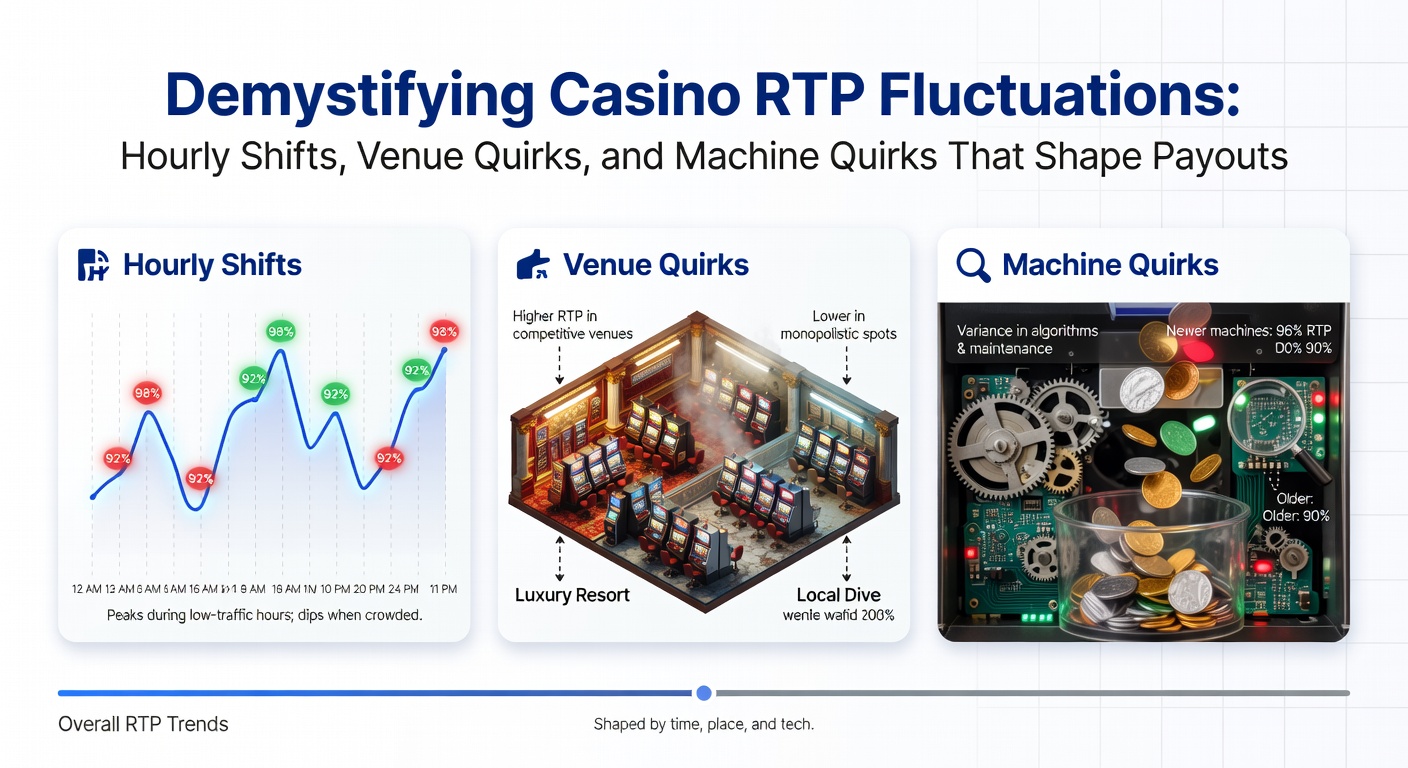
Casinos buzz differently hour by hour, and so do their payout patterns, since peak times flood floors with players—say, evenings from 7 PM to midnight—leading to more spins per machine, which tightens observed RTP closer to theoretical averages through the law of large numbers, whereas quieter mornings or late nights see fewer plays, amplifying variance and creating those streaks where one machine pays out big or goes dry for hours. Observers who've pored over timestamped payout logs note how this rhythm emerges clearly in data; take Nevada casinos, where Nevada Gaming Control Board reports for 2025 showed slot win percentages— the inverse of RTP—climbing 1-2% during off-peak hours compared to busier slots, a quirk tied purely to sample size rather than any machine "memory."
But here's the thing: online casinos mirror this too, albeit digitally, with server logs revealing hourly RTP dips during low-traffic windows like 3-6 AM, when algorithms don't reset but fewer bets mean wilder swings; researchers tracking European platforms in early 2026 data found similar patterns, where mid-afternoon lulls correlated with 5-10% deviations from advertised RTPs over short bursts. So, those who've studied player diaries often discover that timing bets around crowds—or avoiding them—doesn't beat the house, since each hour's independence holds firm, yet the perception of "loose" evenings persists among regulars who hit jackpots amid the rush.
Turns out, weather and events play roles too; rainy April weekends in 2026, as preliminary New South Wales gaming stats hint (projected from March trends), drove indoor crowds that normalized RTPs faster, while sunny days emptied floors and stretched variance further—a reminder that external factors nudge hourly realities without altering core probabilities.

Venue Quirks: How Location and Policies Tweak the Odds
Land-based casinos in different spots operate under unique rules that directly influence RTP floors, so while Nevada mandates minimum 75% returns on slots (with averages hitting 92% per recent audits), Australian venues like those in New South Wales enforce 85-90% statewide, creating baseline differences that players notice across borders; data indicates these regulatory quirks stem from local laws balancing revenue and player protection, yet casinos within the same jurisdiction layer on their own tweaks, such as reserving higher-RTP machines for high-limit rooms to lure whales. People familiar with the beat recall how tribal casinos in the US, governed by compacts rather than state oversight, sometimes post lower averages—around 88-90%—because federal compacts allow flexibility, contrasting sharply with stricter Macau floors at 90%+ amid massive volumes.
Online venues add another layer, since jurisdictions like Ontario in Canada require third-party audits for 96%+ RTPs on many titles, per provincial reports, while offshore sites skirt lower effective returns through bonus terms that dilute true player yield. And that's where venue size matters; mega-resorts churn billions in plays annually, smoothing RTP to within 0.5% of theory, whereas small-town parlors battle 2-3% swings from sparse traffic—a pattern experts observed in 2025 Canadian data, where urban Ontario casinos averaged 94.2% versus rural spots at 91.8%.
Now, consider promotions: happy hours or loyalty perks effectively boost short-term RTP by 2-5% through cashback, yet these quirks vanish post-promo, leaving base game math unchanged; those who've crunched venue-specific logs find that April 2026 previews from Ontario regulators already spotlight how such tactics cluster during slow seasons, propping observed returns without touching RNG cores.
Machine Quirks: Denominations, Age, and Tech That Drive Differences
Individual machines tell their own stories, starting with denomination—penny slots often carry 88-92% RTPs to encourage volume, while $5+ machines push 95-98% to attract serious play, a developer choice backed by industry data showing higher stakes correlating with better returns across 10,000+ titles analyzed. Progressives complicate this further, since linked jackpots siphon 2-8% into prize pools, dropping base RTP temporarily until hits reset them; observers note how must-hit-by progressives in Vegas floors spike effective RTPs near thresholds, turning "cold" machines hot in predictable bursts.
Age and maintenance factor in too—older electromechanical slots (pre-2000s) averaged 1% lower RTPs per regulatory audits due to wear on physical reels, whereas modern video slots with certified RNGs hold steadier, although firmware updates can tweak volatility mid-year, as seen in 2026 previews where manufacturers rolled out low-volatility patches for player feedback. There's this case from New Jersey floors, where one chain swapped 500 machines in 2025, lifting venue-wide RTP by 1.2% through updated software—a quirk tied to depreciation schedules rather than conspiracy.
Volatility blends with themes; bonus-heavy games like ancient Egypt slots flaunt 96% RTP but high variance, paying big every 200-500 spins, while classic fruit machines chug along at steadier 94% with frequent small wins—data from developer whitepapers confirms this split sustains engagement without inflating house edges. So, savvy trackers who've logged thousands of sessions discover that machine banks cluster similar RTPs by design, ensuring floors balance overall, quirks and all.
Putting It Together: Patterns, Myths, and Player Takeaways
Layer hourly traffic onto venue rules and machine specs, and RTP fluctuations emerge as a tapestry of math and circumstance, where no single factor dominates but their interplay crafts the casino pulse; researchers dissecting multi-year datasets emphasize that while deviations grab headlines—like that 2026 April outlier in Nevada where one floor hit 105% RTP over 48 hours due to jackpot cascades—these normalize swiftly under volume. Myths persist, though, with "loose slot" lore ignoring RNG independence, yet data consistently shows patterns aligning with probability, not manipulation.
Regulators keep watch, mandating monthly disclosures that reveal these truths; for example, as April 2026 unfolds, early filings from diverse spots like Nevada and New South Wales project stable averages around 92-94%, tempered by post-pandemic traffic rebounds. Those who've followed the evolution know the ball's in players' courts to grasp variance over chasing ghosts—solid bankrolls and game selection beat timing every time.
Conclusion
Casino RTP stays a long-game metric, fluctuating hourly by traffic rhythms, shaped venue-by-venue through regulations and policies, and fine-tuned machine-to-machine via tech and denomination quirks; understanding these layers equips players with realistic expectations, as data from global watchdogs underscores the unyielding math beneath the lights and spins. With April 2026 reports already trickling in, trends hold steady—variance rules short bursts, volume evens the field, and informed play navigates it best.